English Cello After Stainer c.1800 (EN028) – $23,000 Canadian
English Cello After Stainer c.1800 (EN028) – $23,000 Canadian
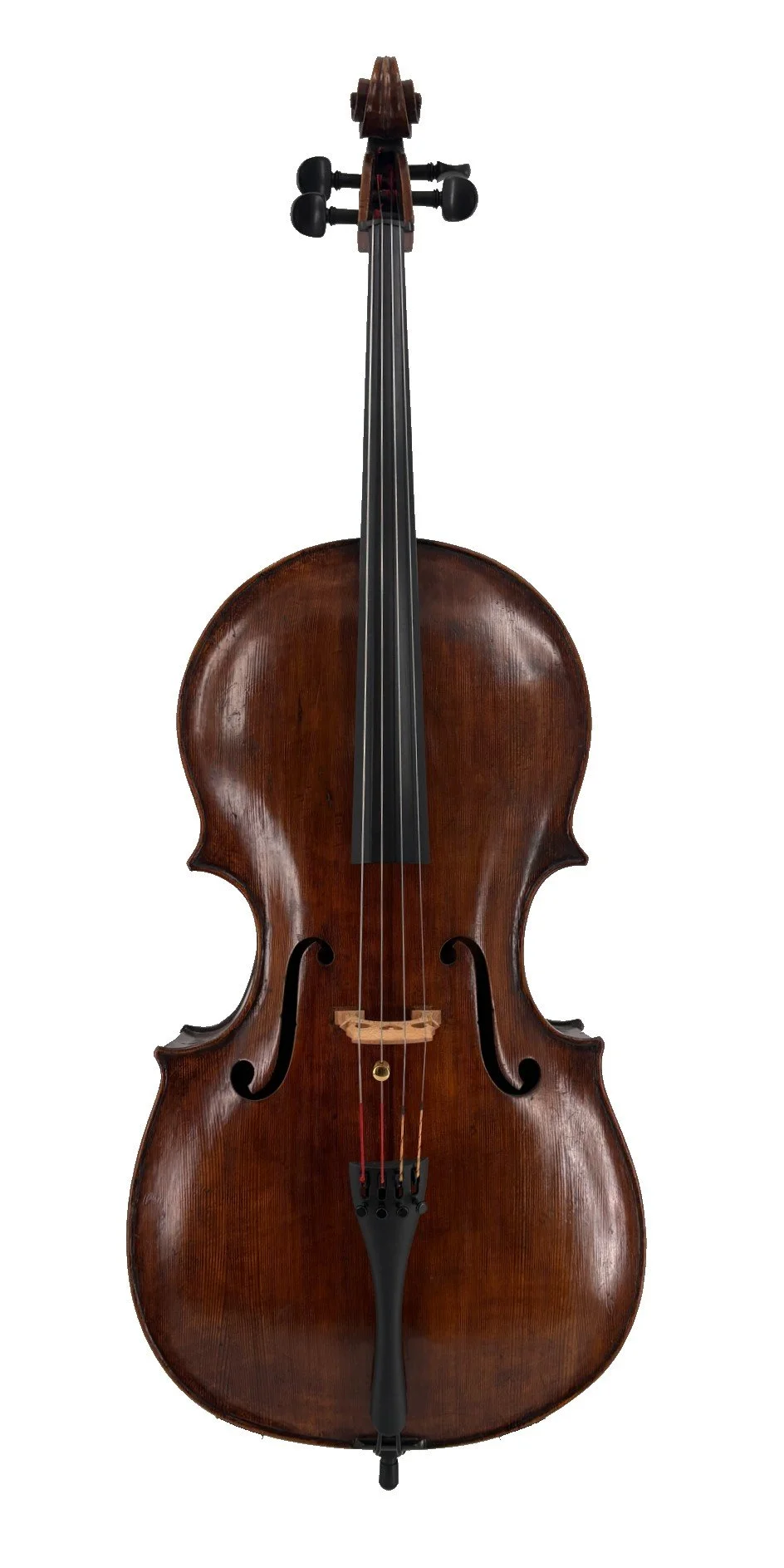
This is a quality early English, fully-restored cello modeled after Jacobus Stainer.
The Stainer model is characterized by high arching, a narrow waist, and a relatively smaller body. It was fashionable in England through the late 17th and early 18th centuries, when Jacobus Stainer of Absam (1617–1683) was widely regarded as the finest maker in Europe, often commanding higher prices than Stradivari.
The model fell out of fashion in England roughly from the mid-to-late 18th century, as the flatter, broader Cremonese model, particularly the Stradivari "forma B" long-pattern and later the standard Stradivari model, became the preferred template. We estimate this cello to made around 1800, the tail end of the popularity of the Stainer model.
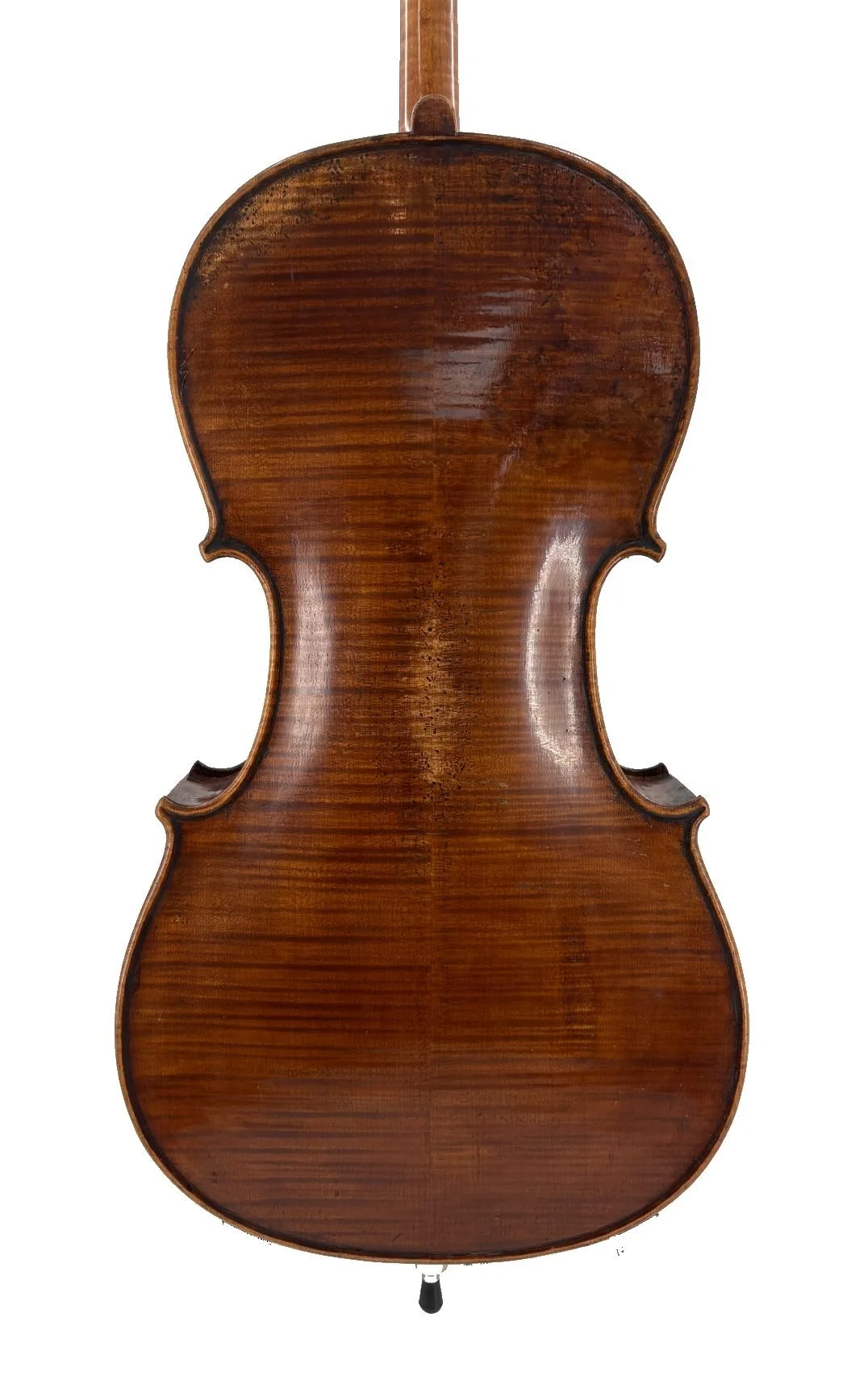
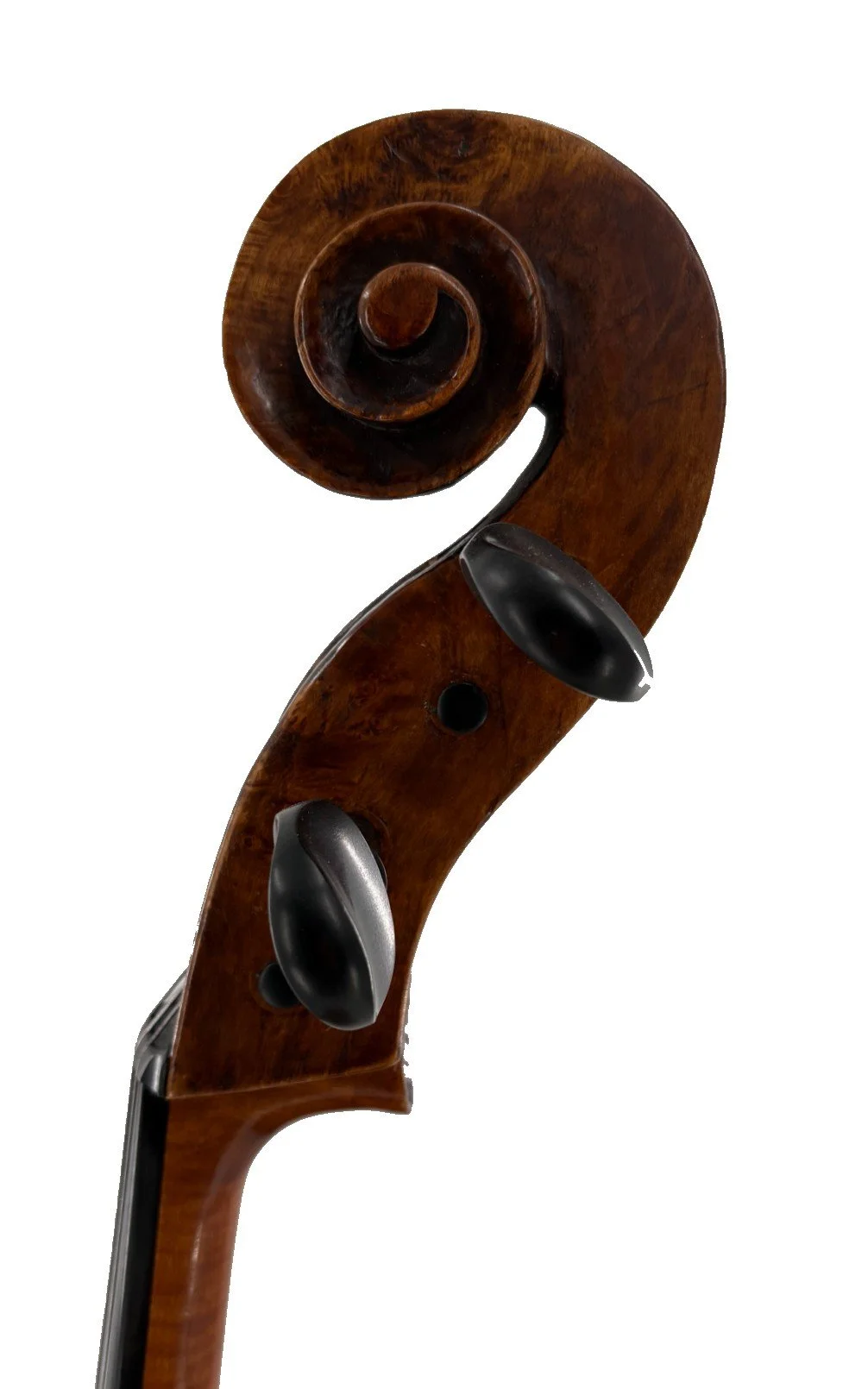
Aside from the model, this cello has a number of unique features that really make it truly remarkable; the back and scroll are of figurative Sycamore, or English maple, the front from four pieces of pine and the ribs are of a plainer maple stock. The lower rib is one piece suggesting the maker had knowledge of Cremonese making techniques. There is a scalloped carving feature at the back of heel of the scroll and an attractive leaf shaped inlay to the back center seam.
The cello has been fully restored by a skilled hand with a new neck grafted. Virtually all 18th century English cellos were modernized at some point, with the original shorter, wedge-set neck replaced with a longer modern-set neck. On close inspection the varnish on the neck has a very slight pink hue which suggests the restoration was carried out in the workshop of J&A Beare of London in the early 20th century, likely by Charles John Wilkinson; Beare’s main restorer at the time. A badly injured WW1 veteran, Wilkinson spent four decades restoring for the illustrious workshop following the war.
The cello is fully restored and in great playing condition. A new bridge, sound-post and new pegs have been fitted. The peg holes have been re-bushed, an ebony crown installed around the button and the instrument adjusted for sound quality.
For a slightly smaller cello with high arching, the instrument projects remarkably well, it responds well when played softly whilst also open to aggressive playing. It’s an instrument that invites the skilled player to shape each note.
The length of back is 746mm. High resolution photos available on request.